From Zero to OneBuilding A Digital Marketplace.
I joined Saloodo! in May 2018 as the first in-house designer. Until then, DHL had relied on agencies and freelancers to get the startup off the ground. We'd proven the concept, but the platform needed a complete relaunch to scale.
- Company
- Saloodo! (DHL Venture)
- ROLE
- Founding Designer
- YEARS
- 2018 — 2020
- SCOPE
- UX/UI · Growth Design · Rapid Experimentation
0%
Shipper Growth
0+
Countries by 2020
0%
Annual Growth
01—STARTUP GROWTHDESIGN SYSTEM & PLATFORM
Refactoring for Scale
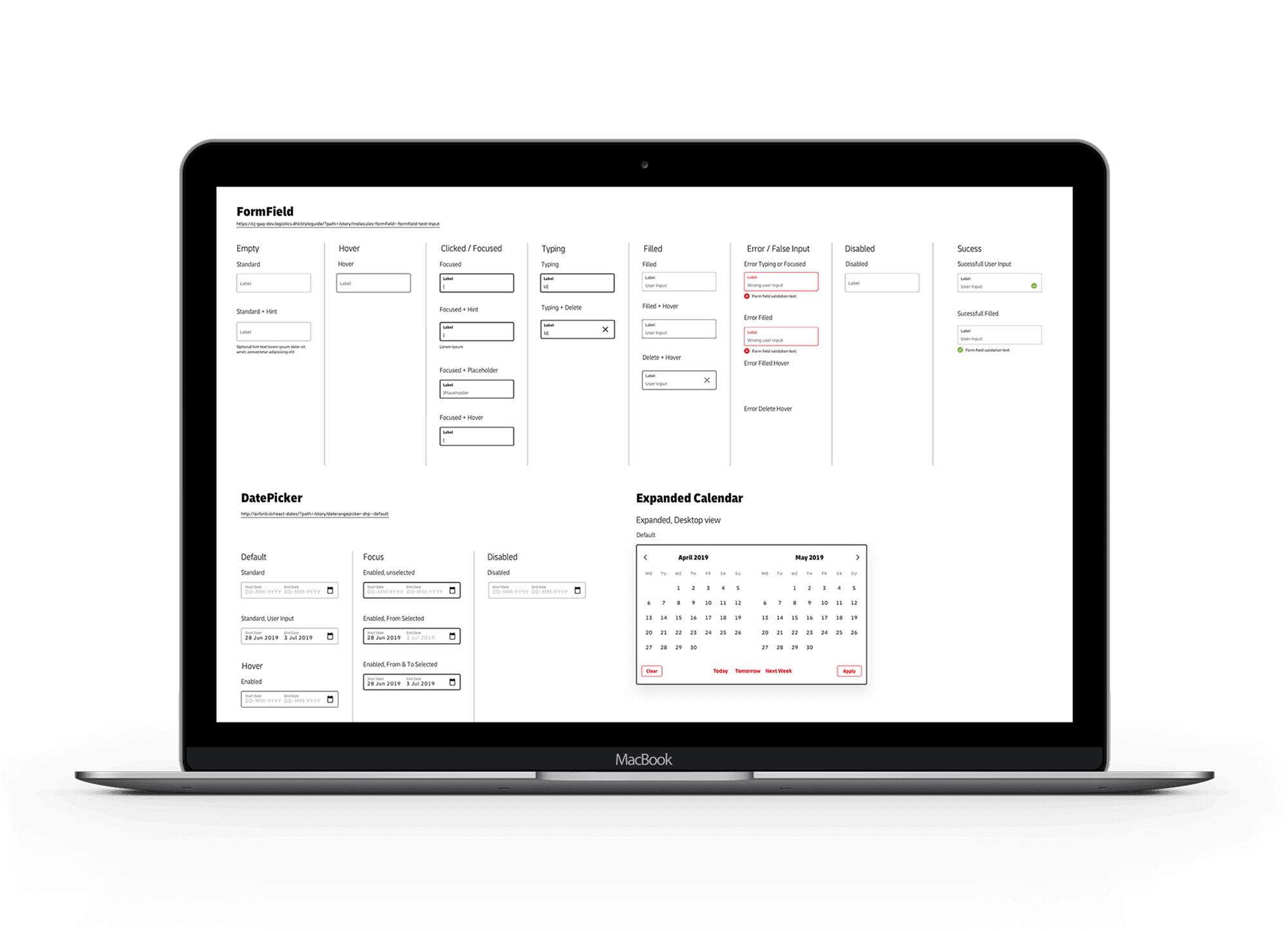
Design System
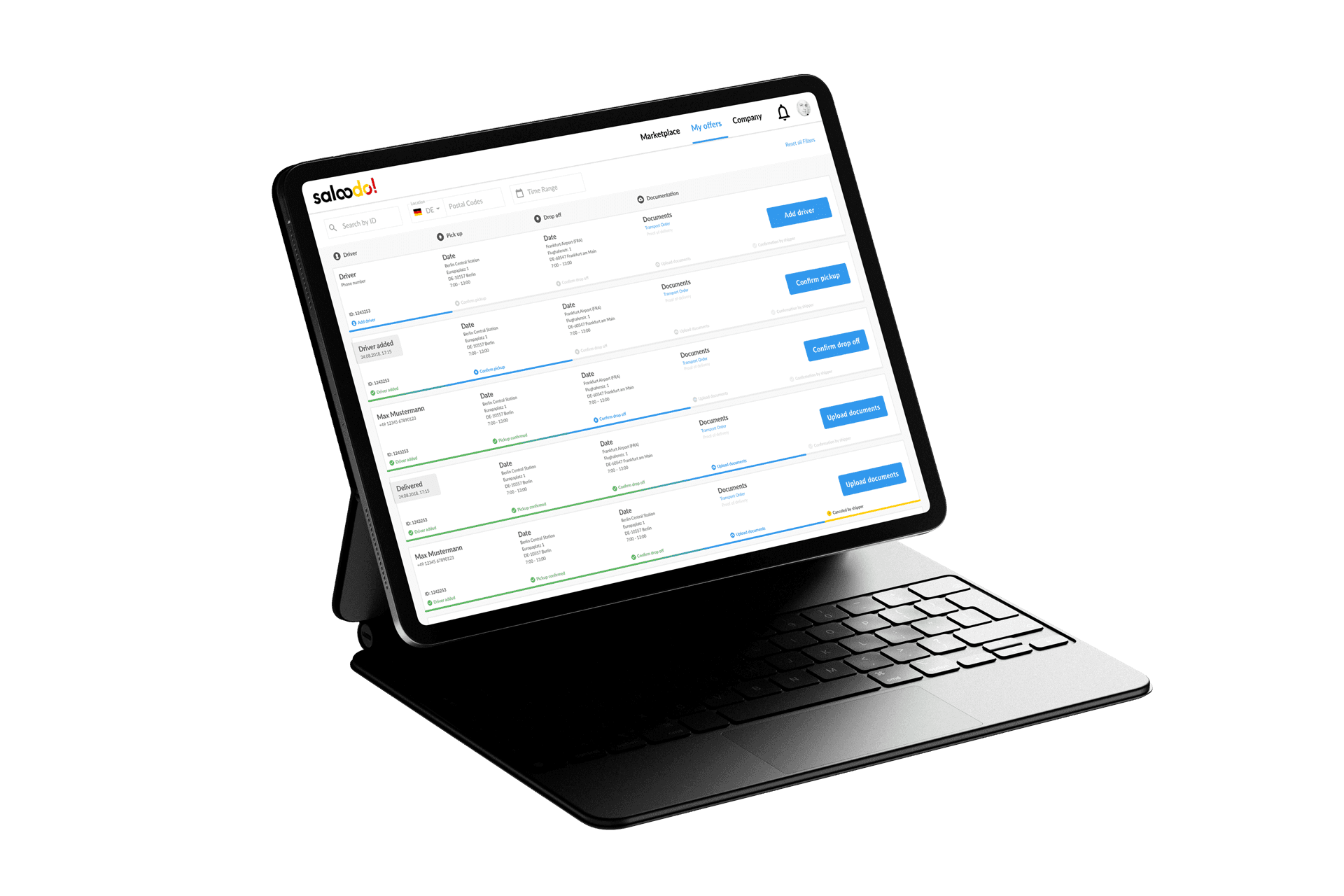
We built a new design system from scratch — atomic principles, reusable components that could adapt market to market without redesigns, tokens wired directly into React so changes propagated automatically. The goal was infrastructure for geographic expansion, not a visual refresh.
Frontend Refactor
With engineering, we rebuilt the entire frontend in React/Redux. Not a coat of paint — systematic removal of technical debt, and a foundation that could hold the growth we needed.
The Result
We launched across multiple European markets in rapid succession — Netherlands, Italy, Poland, Austria, Denmark — each rollout running in weeks because the infrastructure was already there. The refactored platform handled regional variations in language, currency, and regulation without forking the codebase.
Business Impact
DHL's backing plus our own conversion data gave us unit economics that justified real marketing spend. Customers came back because the thing worked.
Tech stack


02—DATA-DRIVEN DISRUPTER
Learning & Experimentation
Saloodo! had one advantage nobody else in the space had: access to DHL's decades of freight data. The data science team used it to experiment with machine learning that was genuinely new for logistics — dynamic pricing, load optimisation, carrier recommendations.
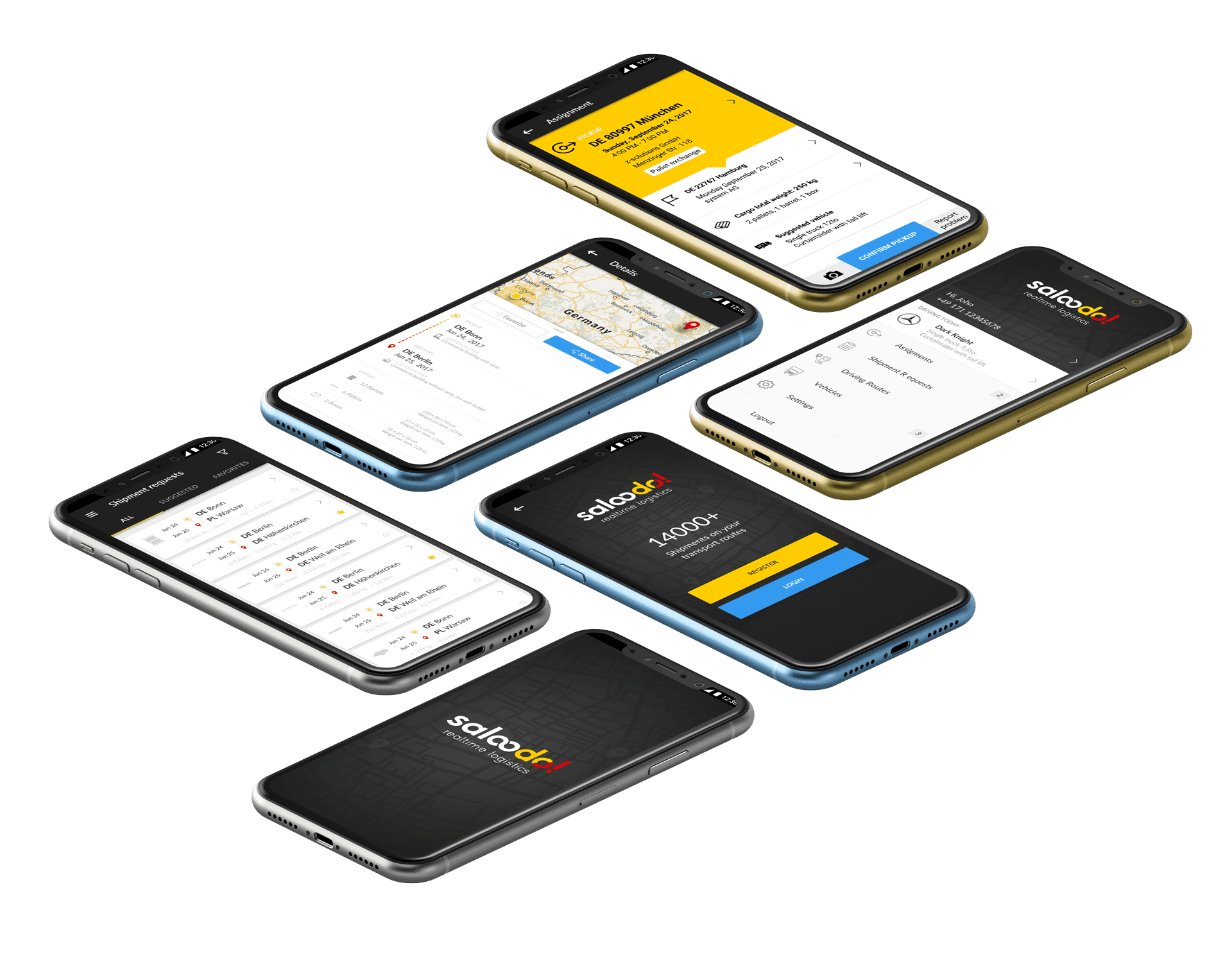
I worked closely with the data science team, translating algorithms into interfaces users could trust. The most interesting work was our PTL (Part Truckload) optimisation engine. We tracked carriers' booked routes and available capacity, then recommended compatible shipments along the routes they were already driving.
The marketplace efficiency was real. Carriers filled partially empty trucks with shipments they'd have driven past anyway. Empty miles went down. Utilisation went up. Shippers got better rates because marginal cost was low. Both sides came out ahead.
— THE LEARNING —
“Smart algorithms create marketplace value — not just automated processes.”
SALOODO! · DATA SCIENCE COLLABORATION
03—UX ROIMEASURING WHAT MATTERS
Measuring What Matters
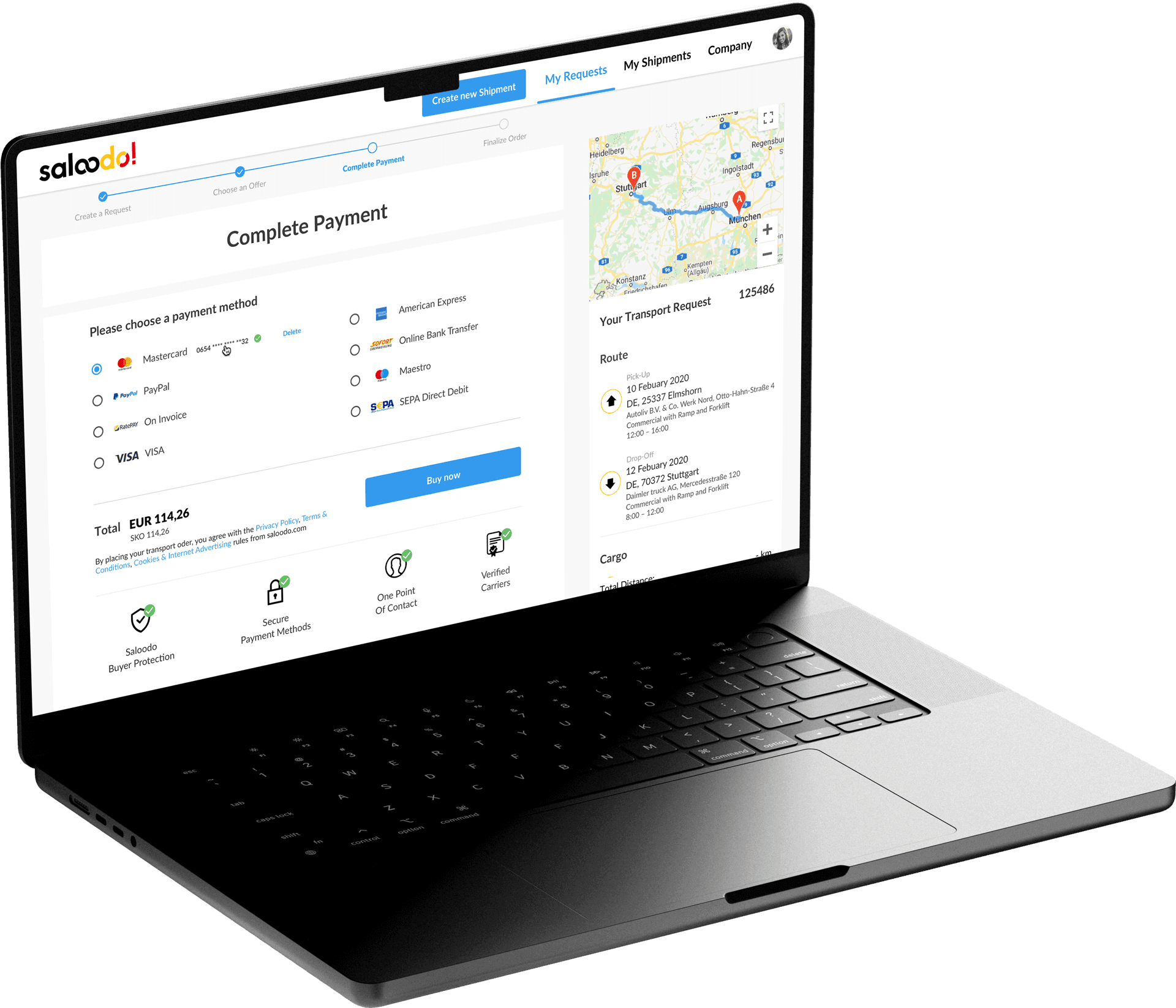
In a startup, you build what drives customer lifetime value and measurable return. Not what stakeholders request. Not what's cool. Every major feature shipped with defined success metrics — conversion lift, retention, cost reduction — and qualitative tests sat next to the analytics. Friction points showed up. Evidence got presented.
We rebuilt the shipment creation flow on what the data was telling us. Time-to-first-shipment for new users dropped by over 40%.
Without quantified evidence — business value, user value, ideally both — features didn't make the roadmap. We changed the platform with confidence because we had the data and had learned to ask the right questions. That's how we experimented, measured, and iterated faster than traditional logistics companies could schedule a meeting.
TECH STACK



Case study
MEA Expansion – From Pilot to 9 Countries in 6 Months
The challenge
By early 2019, Saloodo! had proven itself in Europe. DHL saw an opportunity in Middle East & Africa, but the business model needed fundamental adaptation. MEA had different dynamics — high smartphone penetration but lower trust in purely digital platforms, different logistics infrastructure, different payment norms, different regulations.
Could we scale Saloodo! globally while adapting to radically different markets? Or did every region need a forked codebase, a separate team, and endless customisation?
The approach
I went to Dubai to run stakeholder workshops with local DHL teams, potential customers, and carrier partners. Design Thinking methods helped us figure out what actually needed to change versus what could stay the same.
The workshops surfaced the critical insights. MEA customers needed local DHL entity contracts, not just marketplace transactions, to build trust. WhatsApp was the business platform — SMS and email weren't enough. Some markets needed convoy shipments for high-value goods because of security concerns. And most importantly: some markets needed a pure marketplace model, while others needed a DHL-backed forwarder hybrid.
From the insights, we designed UX flows, sitemaps, and a multi-tenant platform that could serve multiple DHL business units with separate branding, workflows, and margin structures. Two distinct business models on one infrastructure.
Regional customisations — WhatsApp integration, local payment methods, convoy services — ran without rebuilding the core.
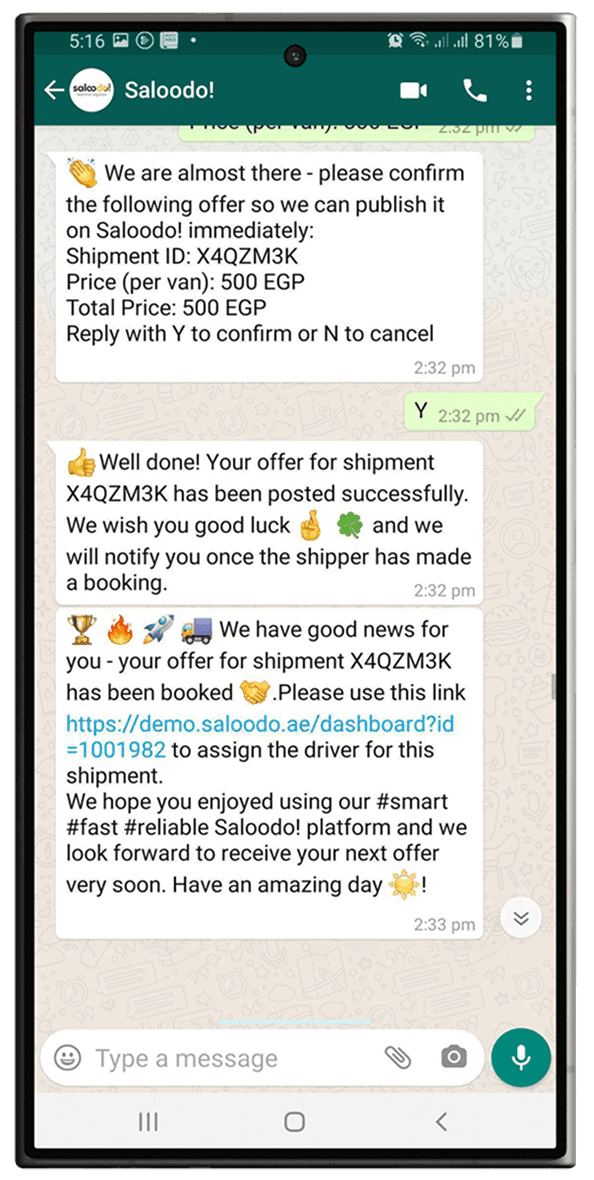
WhatsApp integration for Africa
Go-to-market
The rollout moved fast. UAE launched with Dubai as regional headquarters, then all six GCC countries within six weeks. Egypt and Jordan followed, with 238 people at the Cairo kickoff. By November we launched in South Africa — the first international digital freight platform on the continent, with over 150 at the Sandton event.
The numbers told the story. Nine countries in six months, faster than any European expansion. MEA alone drove growth from 18,000 to 30,000 shippers.
Each additional country took days, not months, because the tenant architecture solved most of the complexity once. Regional teams customised what mattered locally while core platform logic stayed shared. One codebase. One design system. Multiple markets.
The result
MEA validated the global strategy. It proved Saloodo! could adapt to radically different markets without breaking. By the time I transitioned to myDHLi in April 2020, the platform was running on four continents — and the foundation we'd built in those Dubai workshops was what made that possible.
The MEA rollout taught me something I've taken into every role since. Scale isn't about shipping the same product to more places. It's about designing infrastructure flexible enough to meet each market on its own terms — trust dynamics, payment habits, communication channels — without forking the codebase or breaking the team.
That's the work I want to keep doing. Building platforms that meet people where they actually are, backed by the research and data that tell you where that is.
GET IN TOUCH
Want the full story?
Happy to walk you through the strategy, decisions, and outcomes in detail.