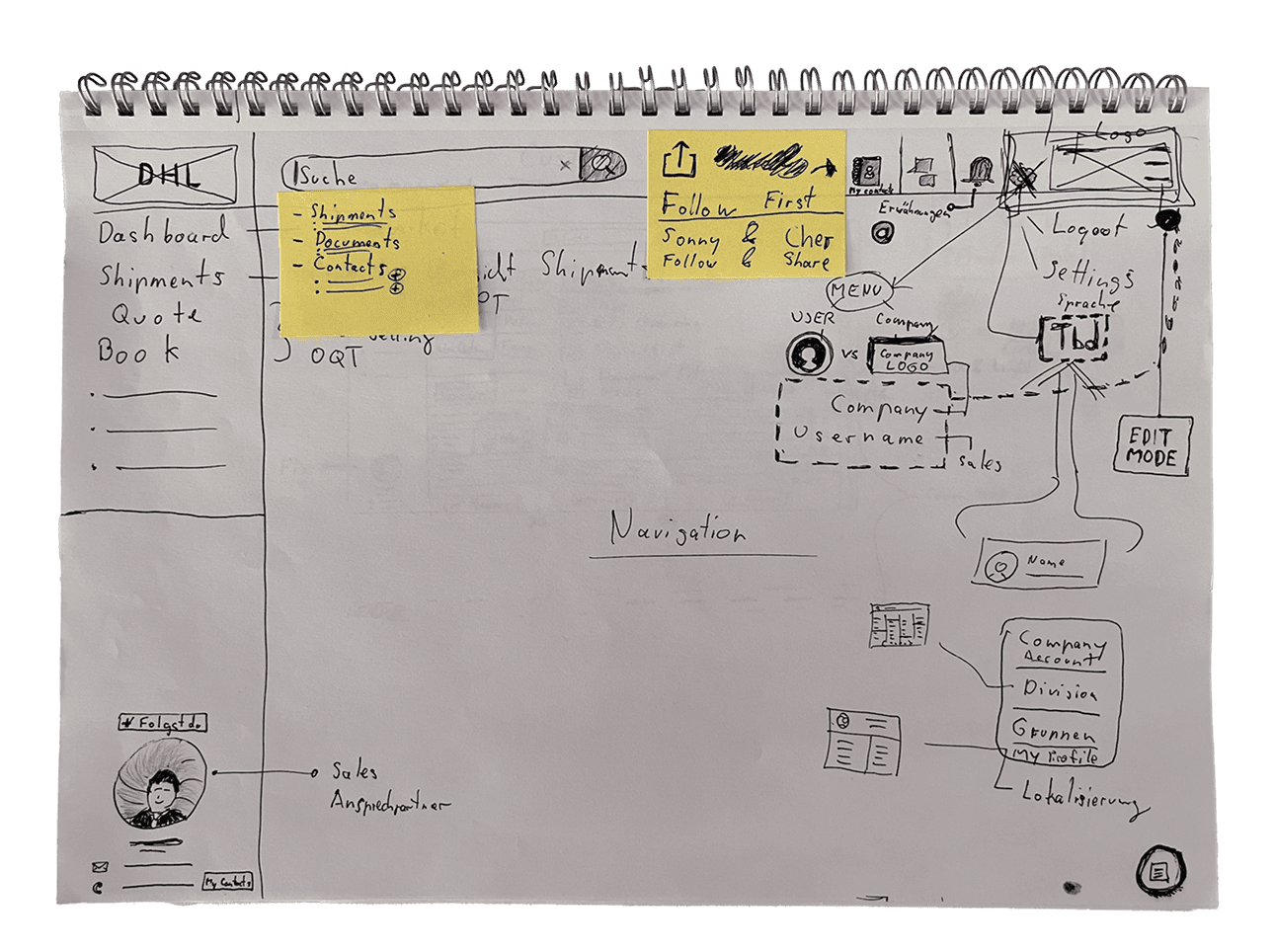
Step 01 · Late 2018
1st scribble of myDHLi from 2019.
Six years of UX leadership behind myDHLi — the unified customer portal for DHL Global Forwarding. From a 2018 sketch in a "digital speedboat" startup to a global platform serving 22,000+ enterprise customers across air, ocean, road and rail.
0×
Customer Growth
0M+
Monthly interactions
€0B+
Digital Quote Revenue
€0M
Cost Savings
€0B+
Yearly Business Volume
0%+
Faster Onboarding & Quote Processing
01—ORIGIN2018
I joined DHL through Saloodo!, a digital marketplace startup — independent, DHL-funded, not a department inside the group. I came in as the founding designer.
The team treated logistics like a tech product — rapid experimentation, ML-powered recommendations, and an honest focus on conversion metrics.
We were DHL's "digital speedboat" — small enough to move fast, protected enough to take risks. That positioning mattered when DHL Global Forwarding needed to reimagine its B2B customer experience.
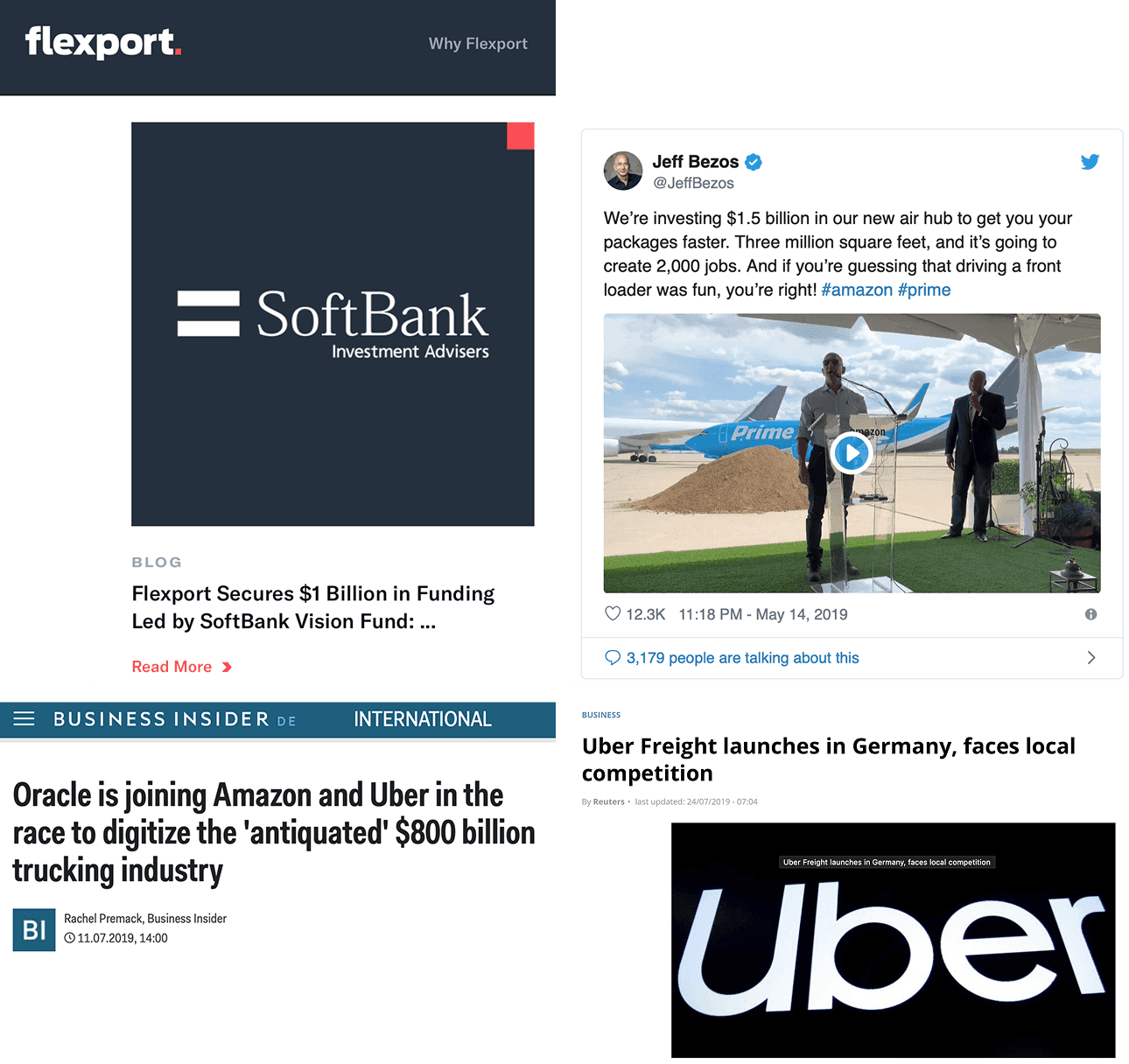
Outside our walls the market was moving fast. Flexport raised $1B. Amazon Freight cut prices by 30%. Uber Freight scaled globally. The $800B logistics industry was being digitised — and DHL needed to be in the race.
02—CONCEPTLate 2018
Late 2018
While I was still at Saloodo!, DHL Global Forwarding asked me to sketch what a unified B2B portal could look like — one place to replace the dozens of disconnected apps customers were navigating.
The Vision
One platform. 360° shipment visibility across air, ocean, road, and rail. Available 24/7 anywhere in the world.
The Reality
Not really a design problem. An organisational one. Decoupling legacy systems. Introducing agile to teams that had only ever shipped waterfall. Convincing stakeholders that dozens of apps had to become one customer experience — and meaning it.
From sketch to system
Step 01 · Late 2018
1st scribble of myDHLi from 2019.
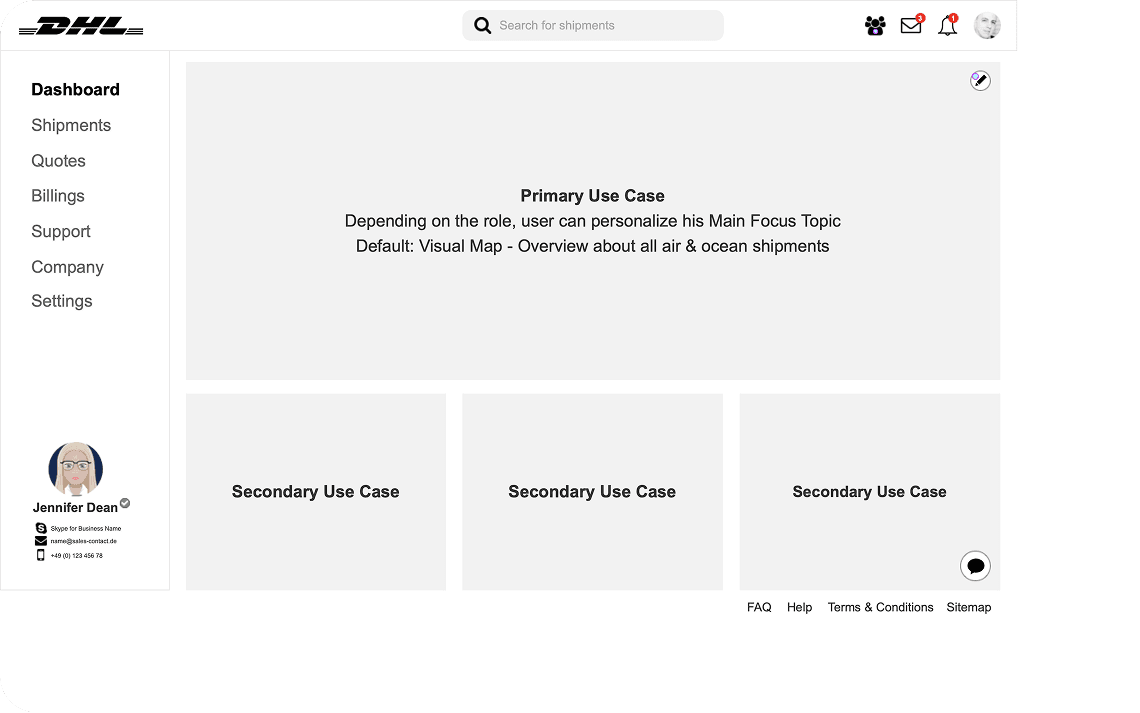
Step 02 · 2019
1st Axure prototype for customer interviews and stakeholder workshops.
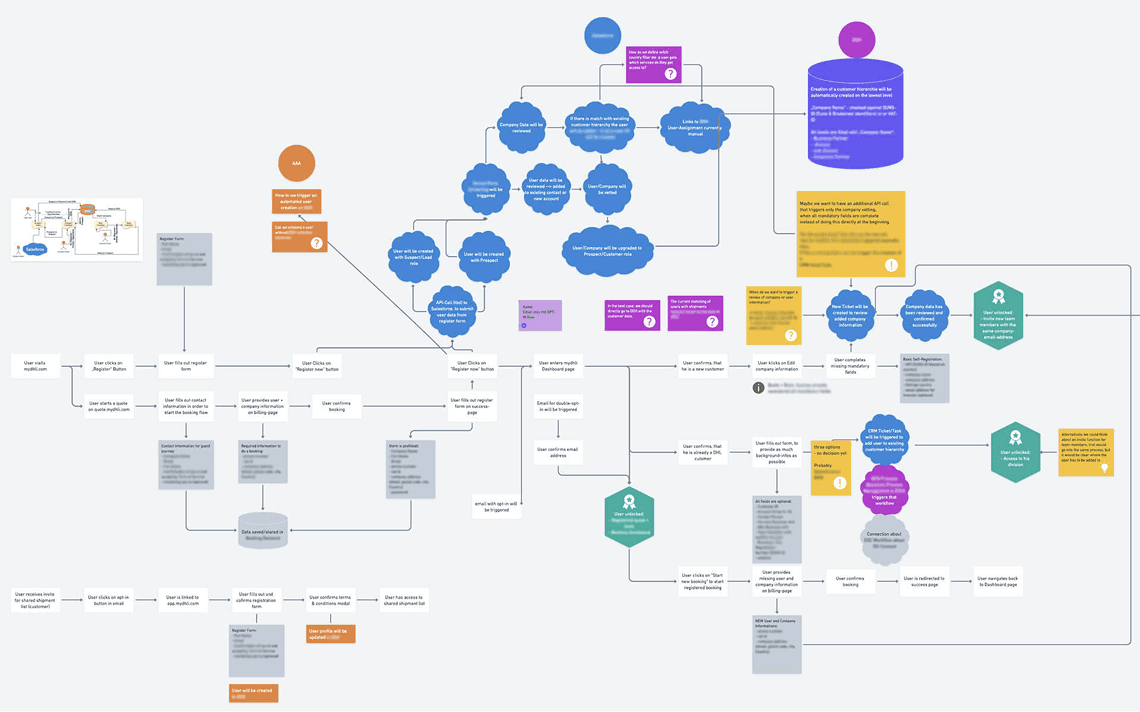
Step 03 · 2019
Early flow chart for system discovery, and basis for self-registration.
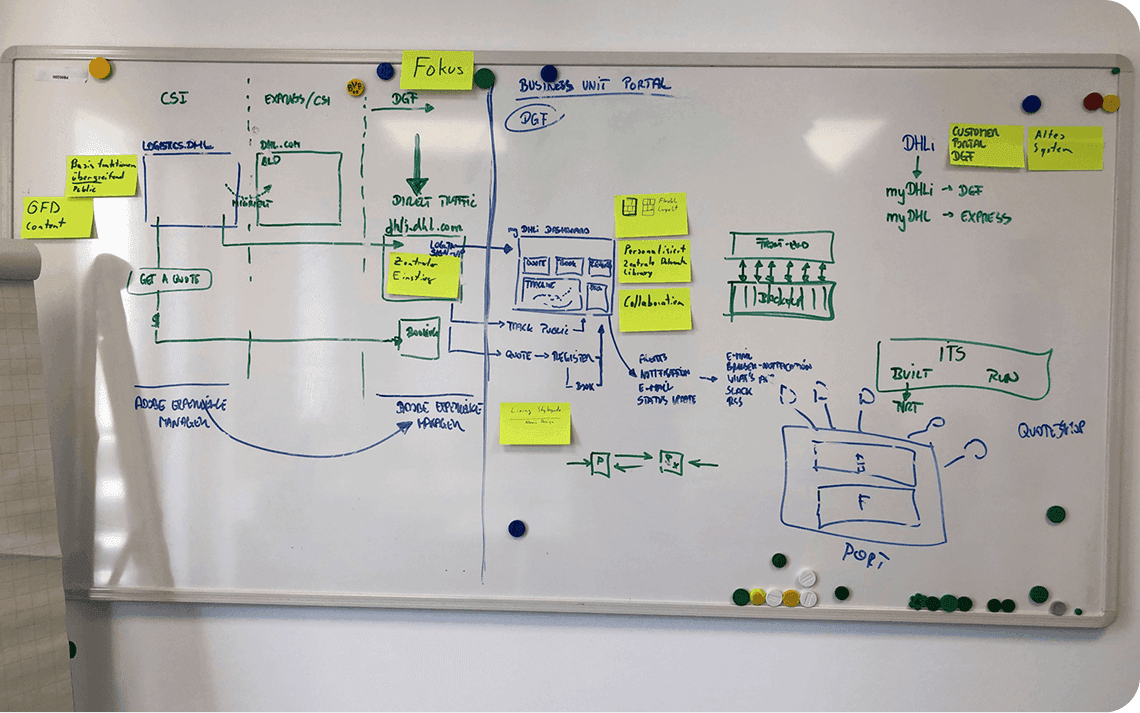
Step 04 · 2019
Early DHL landscape and architecture brainstorming session.
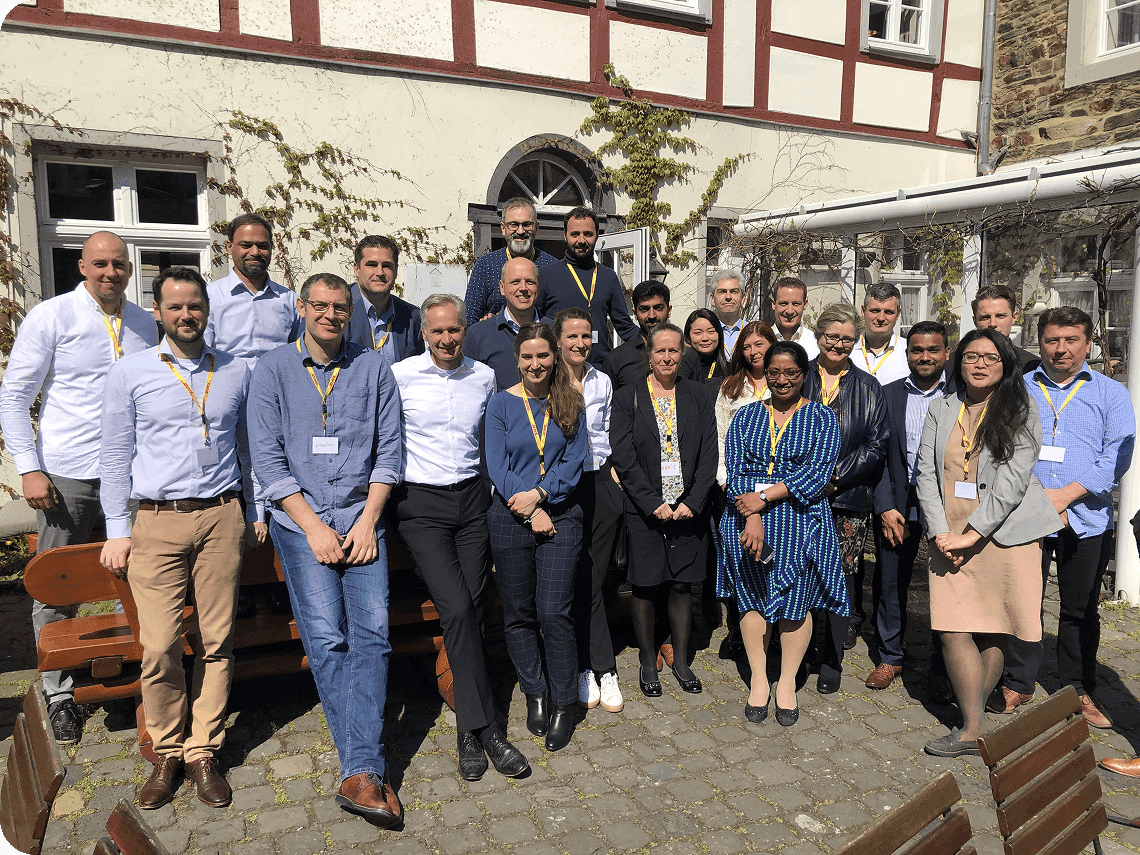
Step 05 · 2019
Initial myDHLi Kick-Off/Stakeholder Workshops with Saloodo-Team in Bonn
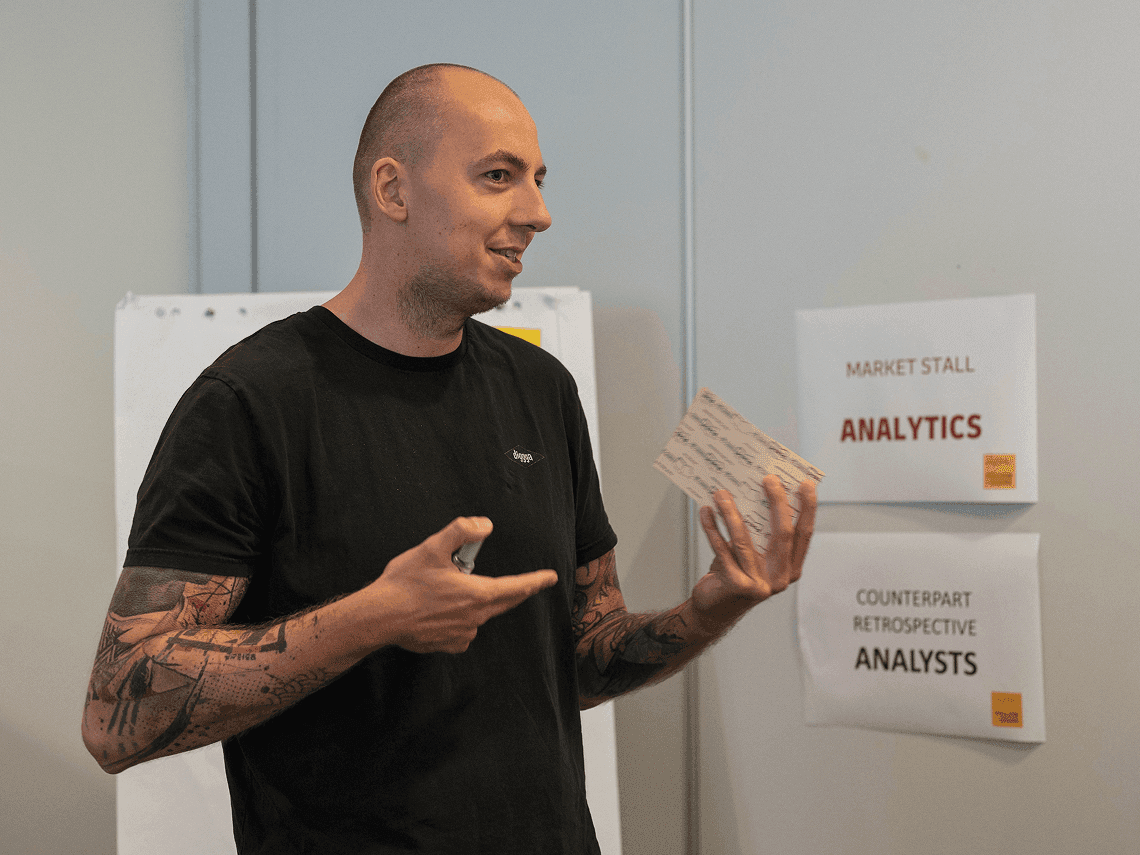
Step 06
UX-Research & Analytics Training
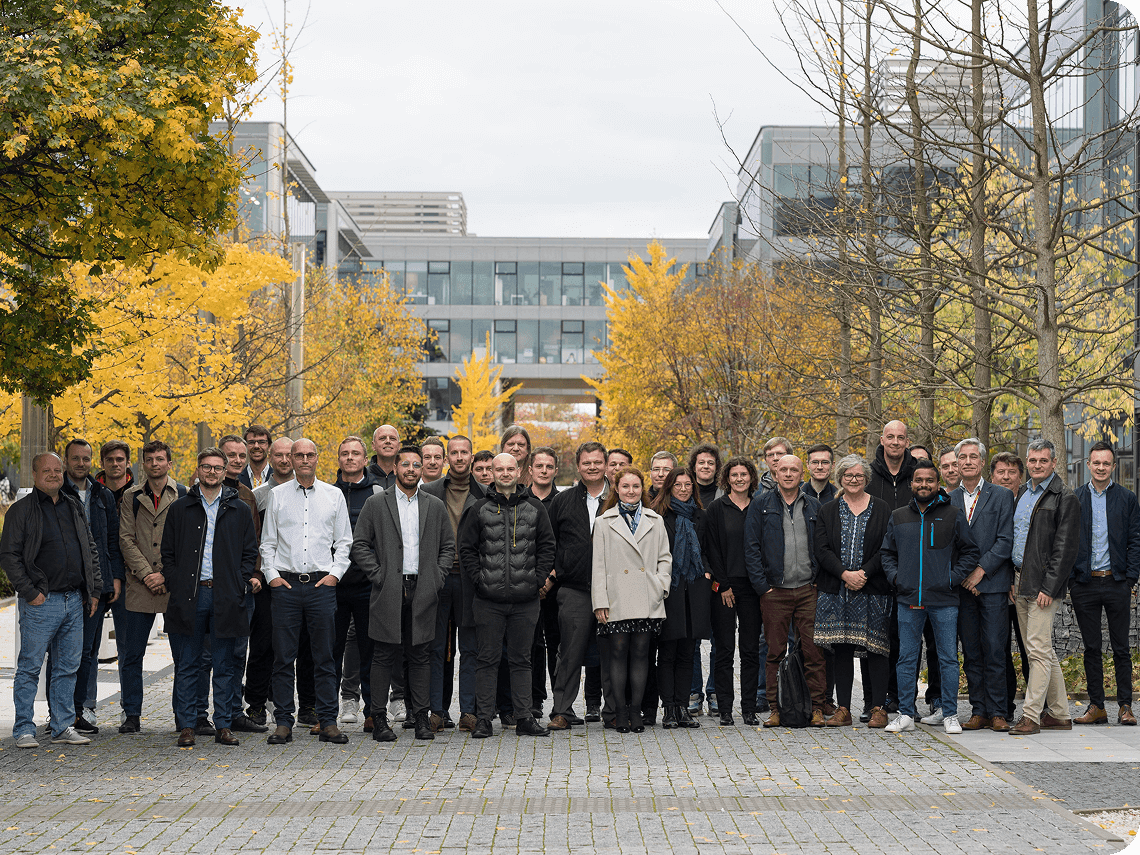
Step 07
IT-Workshops in Prague
03—LAUNCHMAY 2020
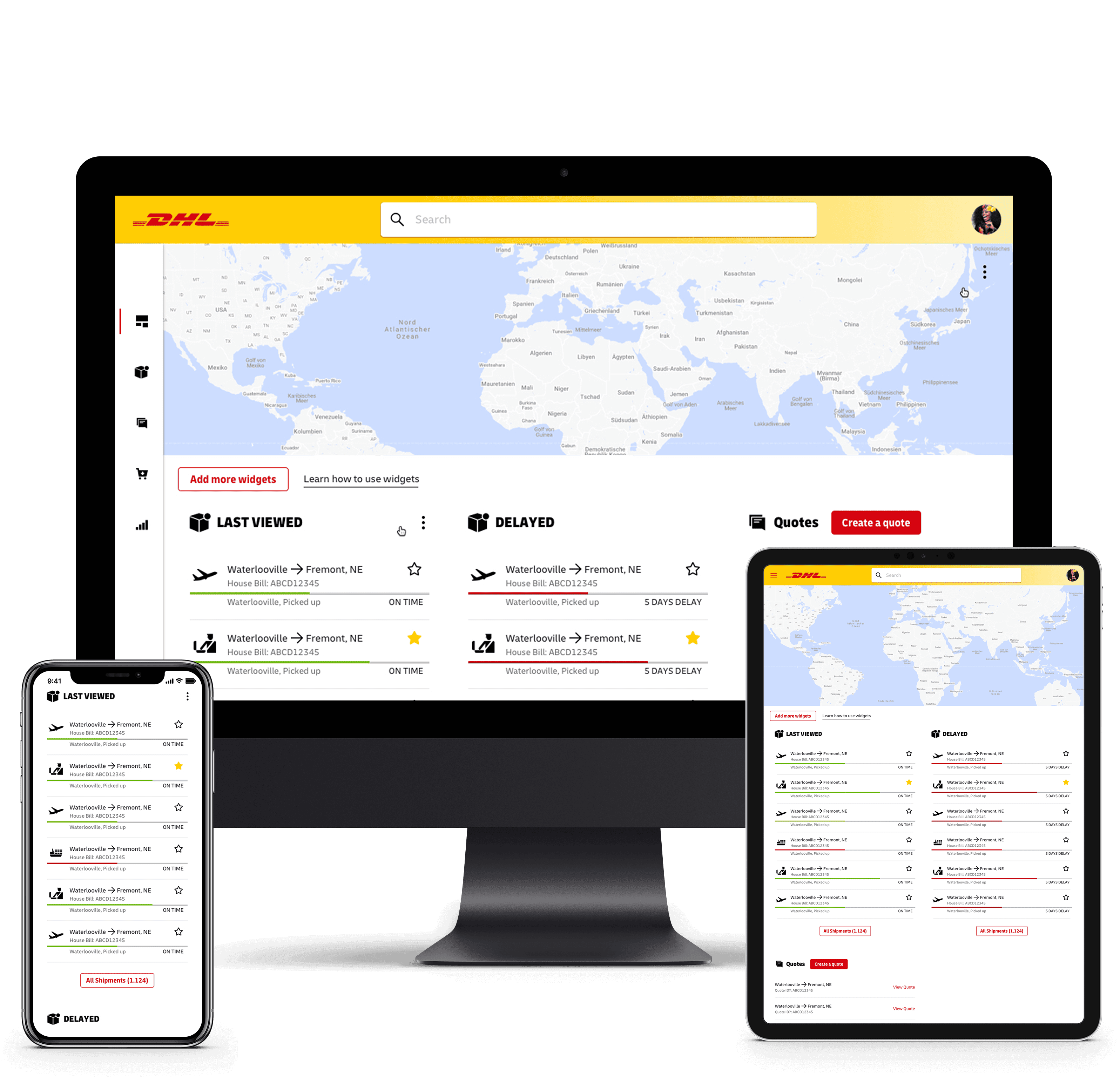
April 2020 I took over as Head of Design for myDHLi. Four weeks later we shipped to production — Quote + Book, Follow + Share, real-time tracking, analytics dashboards, single sign-on — across five continents while the world was locked down. COVID didn't stop the rollout. It made the case for it. Customers who had relied on phone calls and emails suddenly needed a self-service portal that worked. We had one ready.
Enterprise customers







04—RESEARCHUX RESEARCH AND ANALYTICS
When I arrived at myDHLi, the research infrastructure didn't exist. Decisions were intuition-led. Stakeholders had strong opinions and we had no way to test them.
So I built the foundation. UserTesting, Hotjar, Adobe and Google Analytics, custom KPI dashboards wired into the product teams. Then I put research rhythms inside the sprint cycle, so the work stayed close to the evidence.
The team changed with it. Designers embedded in cross-functional squads. We blocked major releases on user testing. A shared research repository made findings accessible across teams. Workshops on research methods and data interpretation kept the muscle alive across product, engineering, and business.
Stakeholder collaboration changed too. Discussions ran on facts. Results were measurable. The work became a shared conversation instead of a negotiation. User-centred thinking became the default starting point for decisions — not the checkpoint near the end.
Research & analytics stack





— THE SHIFT —
“We stopped building what stakeholders requested and started building what data and users actually pointed to.”
MYDHLI · UX RESEARCH & ANALYTICS
05—SYSTEM2020 — 2025 · DHL GROUP'S 1ST SCALED DESIGN SYSTEM
The Fragmented Landscape
DHL had fragments. Guidelines updated every few years. Libraries that competed across divisions — myDHLi, dhl.com, legacy portals — with no shared technical base. Every team rebuilt the same buttons from scratch.
The 5-Year Build (2020–2025)
We started with an audit. Every component, every use case, every portal. Then a choice — replace everything, or build the foundation underneath what already existed. We built the foundation. The myDHLi library aligned with existing tech stacks while creating space to harmonise the design.
Then dhl.com came in. Cross-division collaboration merged our library with the primary system. We survived three tool transitions — Abstract → Sketch Cloud → Figma — without losing consistency.
I represented multiple business units on a DHL Group-wide committee, helping define the standards for what came next.
Underneath, the library runs on Stencil. One set of web components compiles into React, Vue, and Angular — the same button shipped to teams running different stacks, no forking. Lerna manages the monorepo. Storybook drives component development in isolation. TypeScript, Jest, and Puppeteer keep it tested. Docusaurus generates the docs. Azure runs the CI/CD. Most design systems live as files in Figma. This one runs as code in production — and the Figma libraries stay connected to it.
Every component moves through the same path. Creation → quality check → design review → publish. Validation criteria at each gate so the system stays clean as it scales.
The Shift
We reversed the model. Guidelines used to describe components. Now the components are the guideline — living frontend with connected Figma libraries as the source of truth. No more PDFs.
A scaled design system across leading business units inside DHL. Faster development. Consistent experiences. The foundation everything new gets built on.
From component audit to system scale · 2020 — 2025
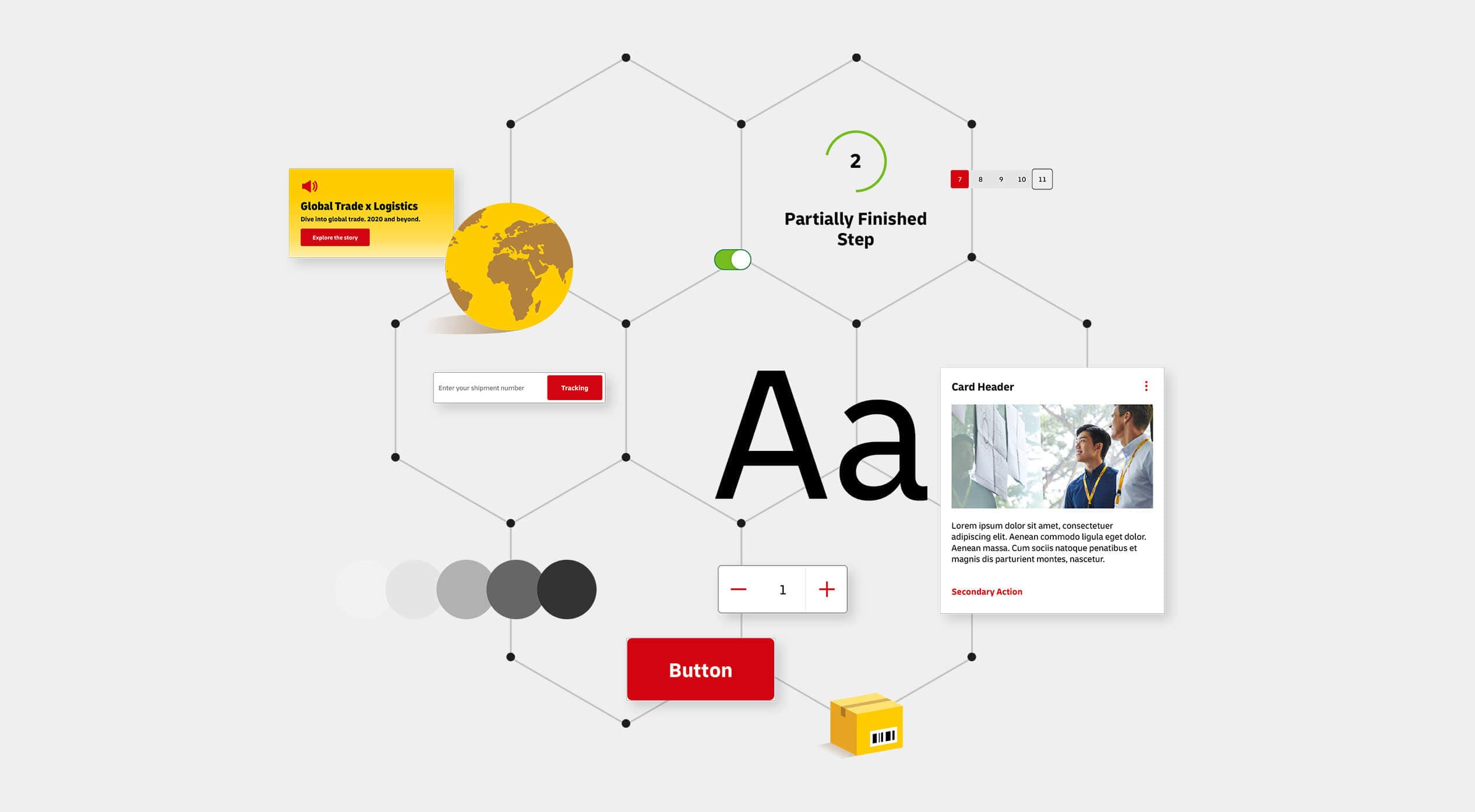
Audit · 2020
Mapping the component landscape across DHL's portals before deciding what to keep, replace, or build.
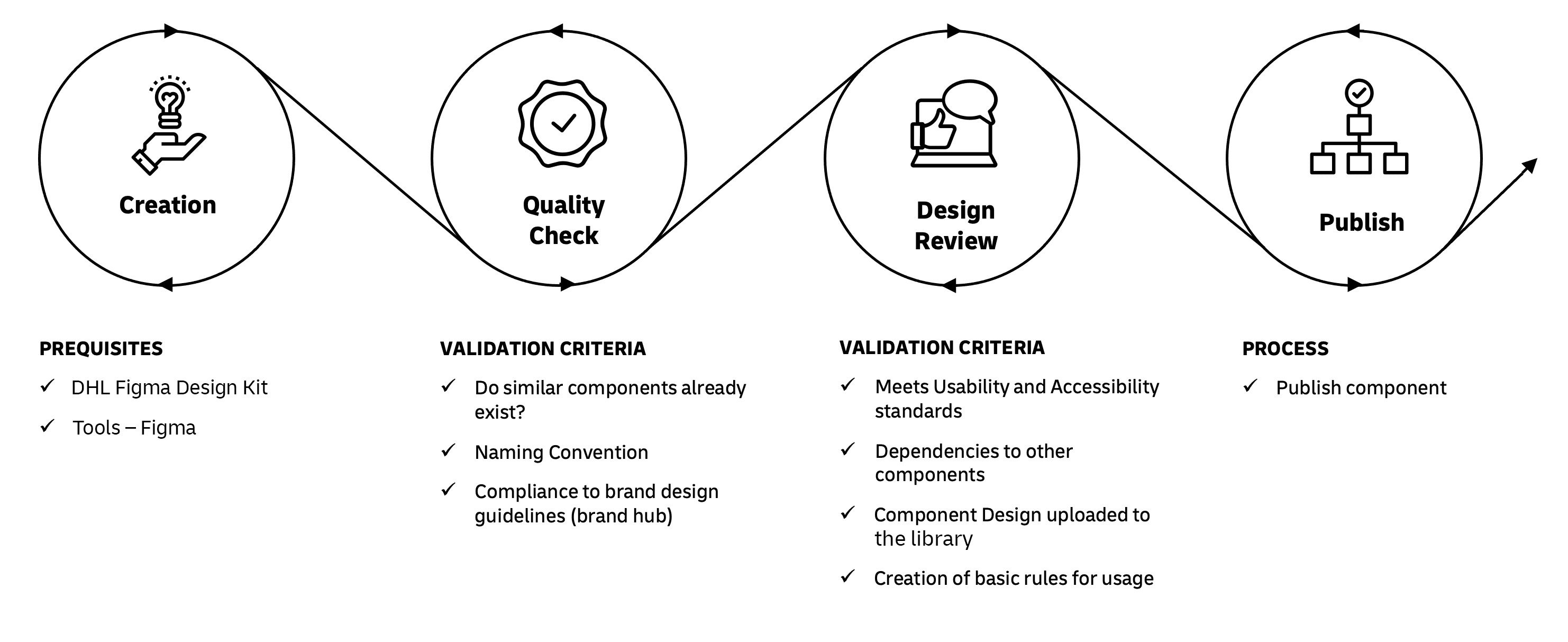
Process · 2021
The component lifecycle: every new component moves through quality check, design review, and publication.
Foundation · 2022
Wireframe to component to live UI — the same pattern, governed across business units.
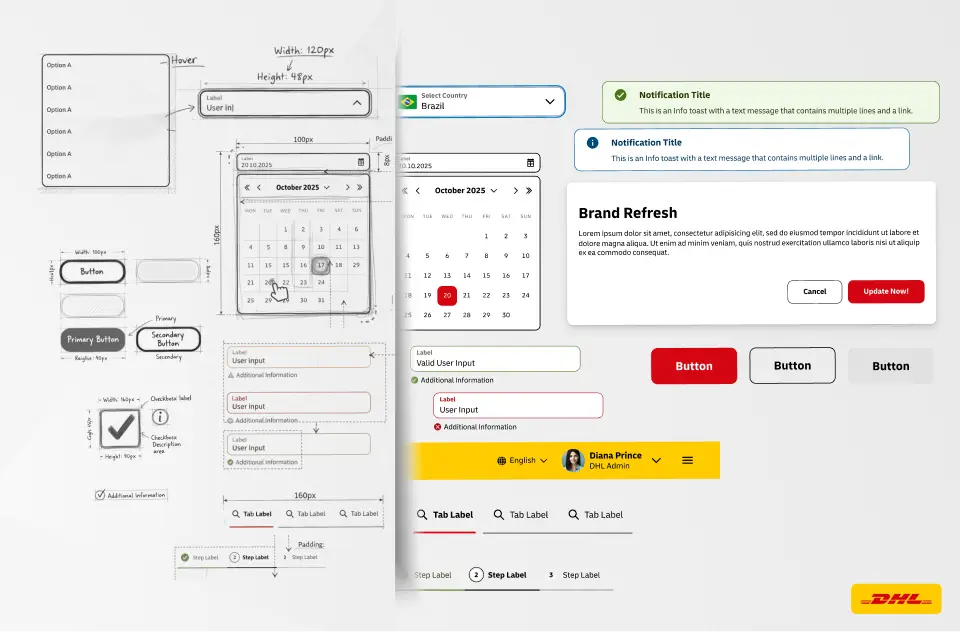
Scale · 2023
Forms, navigation, notifications, brand refresh prompts — components covering the full surface area of a global B2B product.
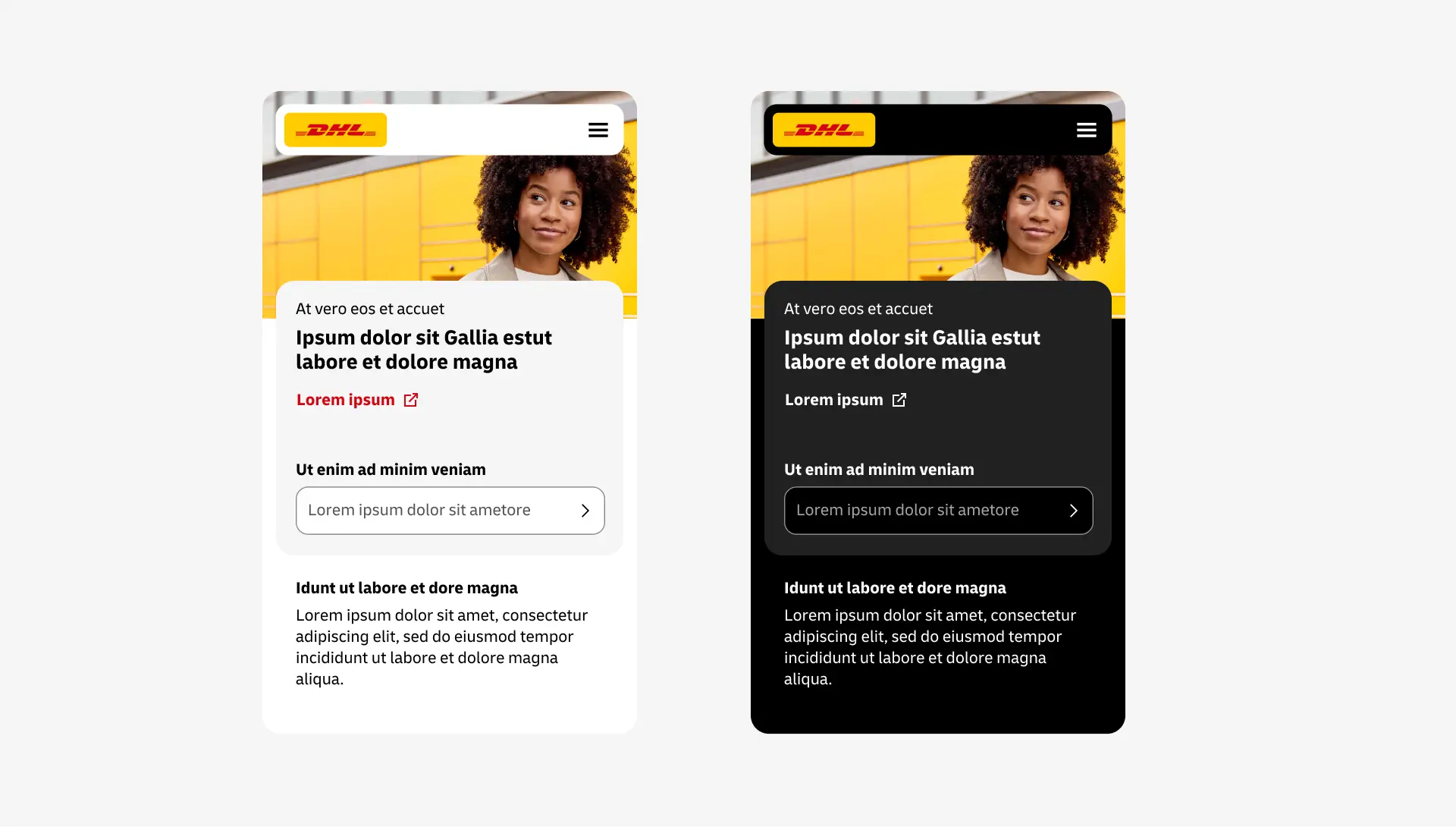
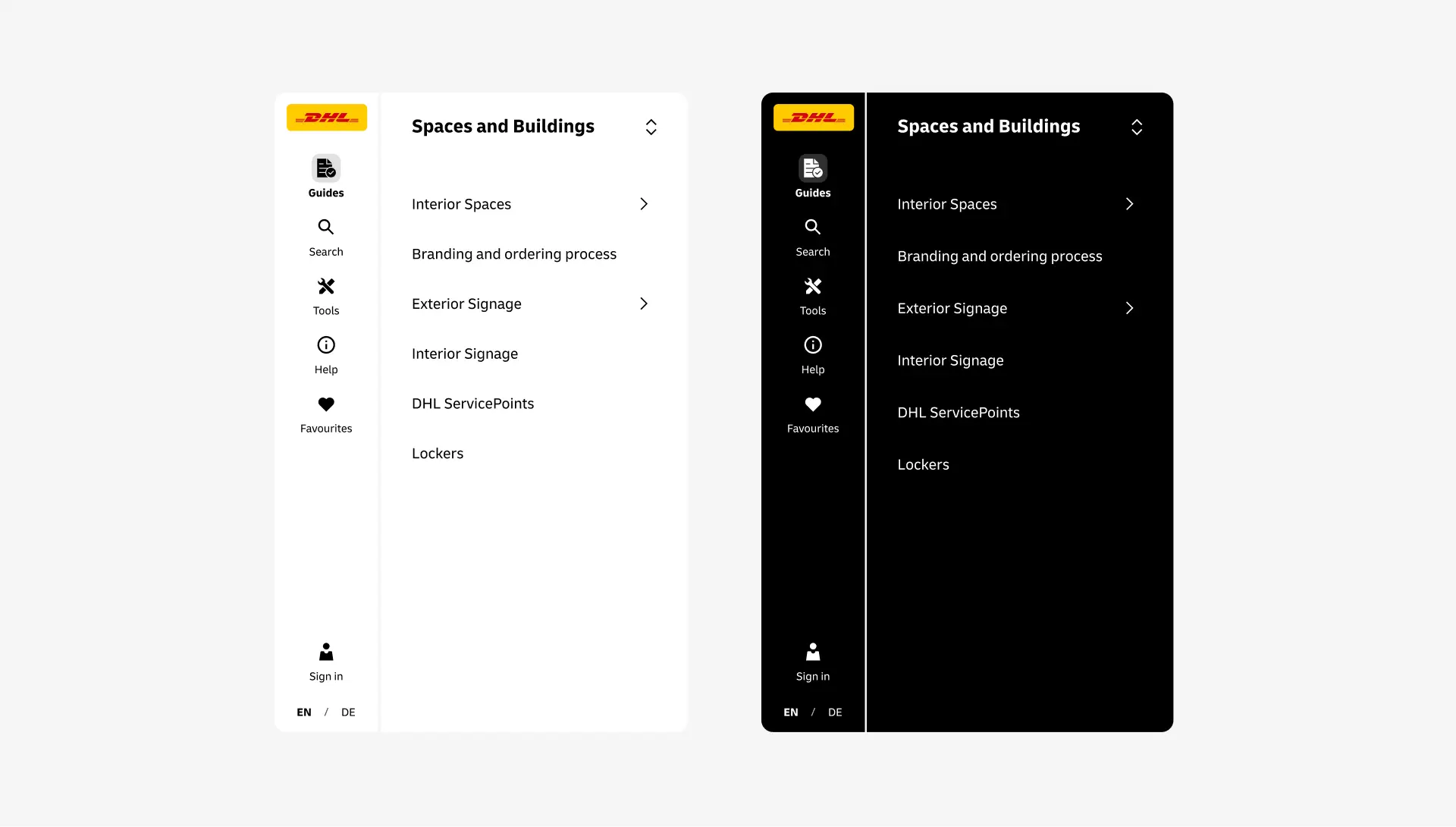
Themes · 2024
Light and dark mode shipped from the same tokenised component. One source of truth, two expressions.
06—TeamDesign OPS
myDHLi grew. 22,000+ enterprise customers, more product tracks, more stakeholders. The design organisation had to grow with it without breaking what made it good. Headcount was the easy part. The harder part was building the frameworks around it: documentation as the default, async-first across EMEA time zones, dual-track agile so discovery and delivery ran in parallel, and governance that let designers from other divisions contribute to the system without breaking it.
The Figma move was the turning point. It became the home for the design system and the open playground for sharing — the invitation other teams needed to contribute. The internal design community started talking across divisions in a way that wasn't possible before.
Three to five times more projects with roughly the same team size. That's what the infrastructure was built to do.
Case study
The challenge
The portal had always meant to serve the smaller customers. The economics had never allowed it. Operational costs made one-time shipments unprofitable, and a 10–12 day onboarding process was too slow for companies with lower shipment volumes. The enterprise accounts — the ones with contracts big enough to justify every extra day of setup — were covered. Everyone else was losing interest before they got started.
The project
A cross-functional initiative for the US market opened the window. I came in as lead designer to rebuild the online sales experience — remove friction, accelerate onboarding, and make smaller accounts economically viable.
Process mapping surfaced the real bottleneck. It wasn't compliance itself — it was the layers of review and approval between departments that compliance had been blamed for. That insight reframed the project.
Workshops with operations and sales rebuilt the workflow. Decision-making consolidated. Redundant approvals removed. Clear data-driven criteria replacing subjective gates. Onboarding dropped from 10–12 days to 3–4 days — before a single new feature shipped. Real prospects validated the model, the KPIs got reported back, and the numbers gave us room to keep pushing.
The result
Full digital enablement brought setup times to under 24 hours.
A self-registration concept had been sitting in my drawer for years — instant booking access, automated account creation, compliance running in the background. It hadn't moved because the business case had never been loud enough to reach the top of the roadmap. The 91% reduction made it loud. Stakeholder support arrived. Priority shifted. The concept moved from drawer to foundation inside the same project.
Senior leadership adopted the new process as the blueprint for other DHL markets. A $2.5 billion segment we had never properly served opened up. The smaller customers landed on the roadmap with the same weight as the enterprise ones.
What I'm proud of in this one isn't the 91%. It's that the small shippers — the founders, the teams without an account manager on speed dial — finally got the same digital service the enterprise accounts took for granted. That's the work I'm really passionate about.
Standing in for the users without a stakeholder voice, and backing them with the research and data that give them weight in the room. Building momentum patiently enough that when the window opens, the team is ready to take the shot.
GET IN TOUCH
Happy to walk you through the strategy, decisions, and outcomes in detail.